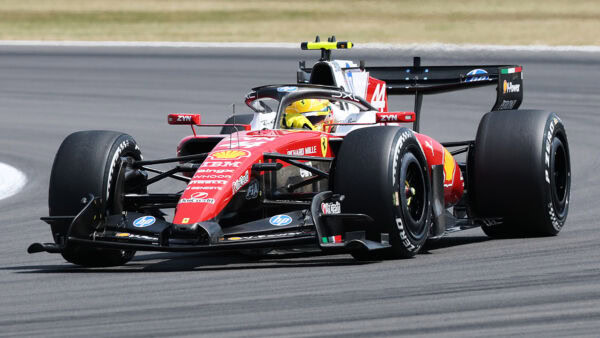


Crash, criticism, chaos: the new F1 regulations are causing massive problems, and now the FIA has spoken out. These changes could still save Formula 1 in 2026.
The first three races of the 2026 Formula 1 season are behind us. Criticism of the new regulations is growing louder from both drivers and fans. “At the moment, you are punished in lap time for pushing to the limit,” complains Charles Leclerc. “Fast corners have now become charging zones. You drive slower there to recharge the battery,” is Fernando Alonso’s damning verdict.
Even Andrea Kimi Antonelli, who won two of the first three races, is raising concerns: “In some places it feels a bit like driving with handcuffs.” In a poll by F1-Insider after the Japanese GP, 72 percent of users called for immediate changes to the regulations, 22 percent found the new Formula 1 “okay,” and only six percent said: “I really like it.”
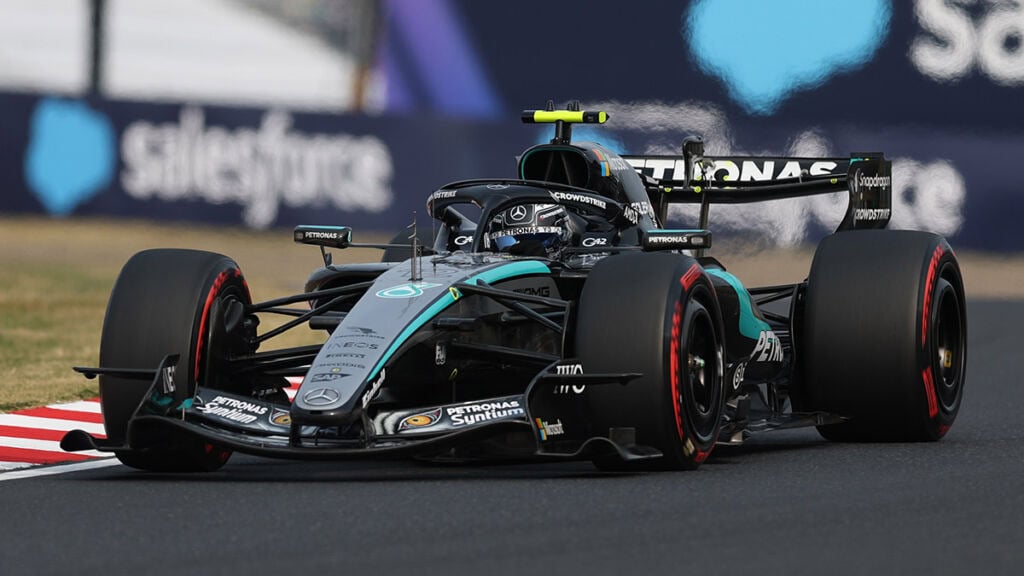
But this is not just a question of attractiveness or a break with the DNA of the sport. Formula 1 has now seen its first battery-related accident: Oliver Bearman approached a battery-charging Franco Colapinto with a 45 km/h speed delta. Colapinto moved aside abruptly, Bearman had to evade, lost control, and crashed into the tire barriers at 50G, suffering a knee contusion.
Of course, Colapinto must also be criticized, as a driver must not suddenly change line when a faster car is approaching. However, this is not only a matter of driver responsibility, but also of safety, something this engine regulation is now putting at risk. Such speed differences in these sections did not previously exist in Formula 1 races; they are now part of battery management.
Following the heavy Bearman crash and ongoing criticism, the FIA has issued a statement: “There will be several meetings in April to evaluate the functioning of the new regulations.” Possible adjustments will also be discussed “to achieve the best possible outcome for the sport and for safety.” But it is clear: more than just one adjustment is needed, not only to put the driver back at the center in qualifying.
Why the 2026 Formula 1 regulations are under such heavy criticism
The core of the problem lies in Formula 1’s new 50/50 hybrid concept. Around half of the total power now comes from the battery. As a result, drivers must constantly harvest and manage energy throughout the lap.
This fundamentally changes the sport. Driving skill loses importance, as energy management increasingly dictates how fast a corner can be taken or when braking should occur.
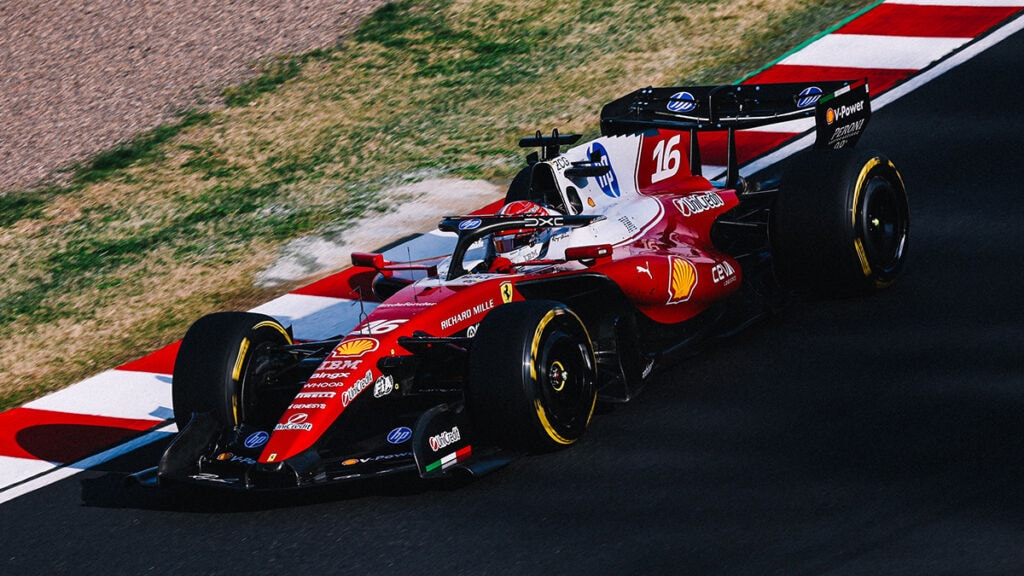
On top of that, there is a form of external control through battery management. Software and strategy tools increasingly determine where energy is harvested and where it is deployed. The driver is effectively following a predefined energy script, with little real control over how much throttle or power is used through corners.
This leads to a softening of challenging sections. High-speed “bravery corners” are taken slower to save energy. At the same time, unnatural racing situations emerge: cars suddenly lose speed on straights or coast early into corners.
Finally, there is a major issue for spectators: hardly anyone understands what is happening anymore. Was that an overtake based on driver skill, or simply a boost advantage? Who is running with how much power? How much battery does each driver have? Why is someone going through a corner at half throttle? Why does a car lose 60 km/h at full throttle?
Onboard footage in particular raises many questions and even draws laughter from motorsport purists.
Formula 1: What can still be changed in the 2026 regulations?
Reduce electric power: One option would be to lower the maximum electric output from 350 kW (475 hp) to around 250 or even 200 kW (271 hp). This would make the battery last longer and would reduce battery management in a few sections of the track. However, there is a risk that teams would simply deploy energy over a longer period, meaning the core battery management problem would remain.
Lower the recuperation limit: Currently, 8.5 megajoules can be recuperated per lap. Reducing this to around 4 MJ would mean that most energy is again recovered through traditional braking. This would reduce artificial energy harvesting. However, total car performance would drop, meaning the combustion engine would need to be strengthened to keep Formula 1 at a top-level performance standard.

Increase recuperation rate: The current maximum recuperation rate is 250 kW. Raising it to 350 kW would allow energy to be harvested more quickly, reducing the need for artificial harvesting elsewhere. The downside: speed differences on straights could become even larger, especially when a driver in overtake mode catches a slower car.
In short, drivers would experience less speed loss for brief moments, but at a higher safety risk. In extreme cases of “super clipping,” cars could be coasting with just 50 kW (68 hp) instead of 150 kW (204 hp).
Limit the gradual reduction of battery power to 50 kW: Currently, depending on track characteristics, teams are allowed to reduce battery output by a maximum of either 50 or 100 kW per second. On faster circuits, the limit is set at 50 kW to avoid large speed differentials, while in Japan it was set at 100 kW.
From a safety perspective, one option would be to introduce a fixed 50 kW limit for all tracks. The downside: drivers would spend longer periods without full power, as long as the total amount of deployable battery energy is not reduced.
Strengthen the combustion engine: Increasing ICE performance could be achieved in several ways: higher fuel flow, adjustments to tank capacity, increased turbo boost, or more powerful fuel. The potential five-week gap in the calendar due to the ongoing Middle East conflict, possibly affecting races in Bahrain and Saudi Arabia, could give Formula 1 time to evaluate and implement such changes.
Our insider Ralf Bach adds: “Andy Cowell (former Mercedes engine chief) once told me during a factory tour that these power units, if unleashed and free of restrictions, could produce up to 2,000 hp. So it would be relatively easy to push the combustion engine back to at least 700 or 800 hp with a few simple adjustments.”
This would make it possible to shift the power balance from 50/50 back to something like 20/80, guide energy recovery in a more natural driving direction, and allow drivers to push at the limit again.
Or the radical approach? The idea of F1-Insider
All of the above changes would ease some of the core issues, but not solve them. Even with adjustments, complex battery management, largely controlled by engineers, would remain.
A more radical approach would be to completely ban super clipping and lift-and-coast. Energy could then only be recovered through traditional rear-axle braking recuperation. This would give the driver full control again.
At the same time, the combustion engine would be strengthened to compensate for reduced electric output. Instead of complex management, electric power could become a constant supplementary boost available at all times, perhaps a steady 80 to 100 electric horsepower whenever the driver is on throttle.
At such a low deployment rate, the battery would never fully deplete, and everyone watching would clearly understand: this car has a fixed level of power.
Additionally, surplus energy, similar to the old KERS system, could be deployed via a push button. The driver would decide when to use this extra boost for around 10 to 15 seconds per lap. Crucially, this would need to be displayed transparently on TV, as it was from 2009 to 2013. Currently, teams do not reveal real battery levels.
The advantage of this more radical regulatory change: no more external battery control, no more artificial energy harvesting, and once again a driver who decides where and how hard to push at the limit, with KERS adding a smaller strategic element.
In short: the driver returns to the center of Formula 1, and drivers, experts, and fans all understand the sport again.
FOLLOW US ON YOUTUBE!
THIS IS F1-Insider.com!